What It Is, and Why It Is So Important to Teach Teens
Overview
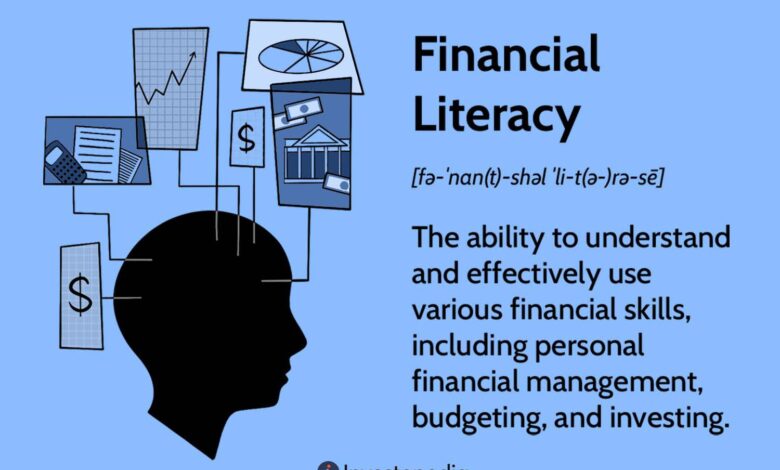
Financial literacy is the essential foundation for a smart relationship with money. It is the start of a lifelong journey of managing the financial aspects of your life. Knowing the basics of money management, budgeting, saving, and investing contributes to a more successful and less stressful life.
The earlier you start to become financially literate, the better off you’ll be.
Key Takeaways
- Financially literate people can cope with the basics of spending, saving, borrowing, and planning.
- A strong foundation in financial literacy supports life goals, such as paying for education or retirement, using debt responsibly, and running a business effectively.
- Financially literate people are not vulnerable to fraud.
- Key aspects of financial literacy include learning how to create a budget, plan ahead, and make wise decisions about investing.
- Free online resources can help you get started.
Investopedia / Paige McLaughlin
Understanding Financial Literacy
Earlier generations relied on cash, and only the relatively affluent had access to loans. Today’s consumers face a world that is both more convenient and more hazardous.
Credit cards, debit cards, and electronic transfers are now preferred over cash. Internet shopping made electronic payments routine. The COVID-19 pandemic virtually ended our reliance on cash, as consumers minimized human contact. Even in brick-and-mortar stores, in 2025, cash is used in only about 11% of transactions.
Meanwhile, the average interest rate on credit cards is just under 23%.
Financial literacy means understanding the costs of using credit.
Pitfalls of Illiteracy
Being financially illiterate can lead to financial disaster, as it increases the likelihood of accumulating unsustainable debt burdens due to poor spending decisions or a lack of long-term planning. This, in turn, can lead to poor credit, bankruptcy, and housing foreclosure.
There are now more resources than ever for those wishing to educate themselves. One such resource is MyMoney.gov, a free online curriculum of financial education created by the U.S. government-sponsored Financial Literacy and Education Commission.
Important
Financial literacy can protect people from becoming victims of financial fraud, a type of crime that is becoming more commonplace.
Scope of Financial Literacy
The range of skills that fall under the umbrella of financial literacy includes household budgeting, managing debt, evaluating financial products, choosing investments, and more.
Many of these skills require at least a working knowledge of key financial concepts, such as compound interest and the time value of money.
Financial literacy can cover short- and long-term financial strategies. The strategy you use will depend on several factors, such as your age, investment time horizon, and risk tolerance.
Financial products such as mortgages, student loans, health insurance, and self-directed investment accounts have grown in importance. It is imperative to understand how to use them responsibly. It’s also important to know which investment vehicles are best to use when saving for a financial goal like buying a home or for retirement.
Other developments in finance, such as e-wallets, digital money, and P2P lending, can be convenient and cost-effective, but only if you know how to use them.
Why Financial Literacy Matters
It Supports Financial Well-Being
Day-to-day living expenses, living within your means, short-term borrowing, and long-term budgeting are essential components of being financially sound. You need to be financially literate to manage these and other essential financial realities as you go through life.
It is important to plan and save enough to provide an adequate income in retirement while avoiding high levels of debt that might result in bankruptcy, default, or foreclosure.
In its “Economic Well-Being of U.S. Households in 2022” report, the U.S. Federal Reserve System Board of Governors found that many Americans are not prepared for retirement. Twenty-eight percent indicated that they have no retirement savings, while about 31% of those not yet retired felt that their retirement savings were on track. Among those who have self-directed retirement savings, about 63% admitted to feeling low levels of confidence in making retirement decisions.
Millennials’ Challenge
Lack of financial literacy has left millennials—the largest share of the American workforce—unprepared for a severe financial crisis, according to research by the TIAA Institute. Even among those who reported having a high knowledge of personal finance, only 19% answered questions about fundamental financial concepts correctly.
Forty-three percent reported using expensive alternative financial services such as payday loans and pawnshops. More than half lacked an emergency fund to cover three months’ expenses, and 37% were financially fragile (defined as unable or unlikely to be able to come up with $2,000 within a month of an emergency).
Millennials also carry large amounts of student loan and mortgage debt. In fact, 44% of them said they have too much debt.
Although these may seem like individual problems, they can have a broad impact. A lack of personal financial awareness created widespread vulnerability to predatory lending in the period leading up to the 2008 financial crisis. Too many people were granted mortgages they couldn’t afford and, inevitably, they defaulted. The impact was felt worldwide.
Fast Fact
If you are a teen or young adult, retirement is decades away, but starting to save now is the best move you could make. The earlier you start, the longer your savings have to compound, and the more money you’ll accumulate. An employer-sponsored retirement account, such as a 401(k), or an individual retirement account (IRA), are good tools to use.
Benefits of Financial Literacy
Broadly speaking, the benefit of financial literacy is that it empowers individuals to make smarter decisions about their finances. In addition:
- Financial literacy can prevent devastating financial mistakes: Naive financial decisions can have devastating effects. The payments on a floating-rate loan can rise unexpectedly. An early withdrawal from an IRA will cost you at tax time. Financially literate people don’t make these mistakes.
- Financial literacy prepares people for financial emergencies: Losing a job or having a major unexpected expense is never easy, but the blow is cushioned for those who have an emergency fund.
- Financial literacy can help individuals reach their goals: By understanding how to budget and save money, people define their immediate necessities and focus their minds ahead to important financial goals.
- Financial literacy fosters confidence: Imagine having to make a life-changing decision without all the necessary information. With knowledge about finances, individuals can approach major life choices with greater confidence. They’ll be more likely to achieve the outcome they desire and less likely to be surprised or hurt by unforeseen outcomes.
Strategies to Improve Financial Literacy Skills
Developing financial literacy involves learning and practicing skills related to budgeting, managing debt, paying off debts, and more. It means understanding and using credit and investment products wisely. The good news is that, no matter where you are in life and financially, it’s never too late to start practicing good financial habits.
Here are several practical strategies to consider.
Create a Budget
Track how much money you receive each month and how much you spend. You can use an Excel spreadsheet, a budgeting app, or a piece of paper.
Your budget should include income (paychecks, investments, alimony), fixed expenses (rent/mortgage payments, utilities, loan payments), discretionary spending (nonessentials such as eating out, shopping, and travel), and savings.
Pairing your budget with an expense-tracking app can help identify where you are spending each month and where you might be able to save.
Pay Yourself First
This is a reverse budgeting strategy. It’s tempting to wait until the end of the month and hope there’s money left over to save or invest. This method involves choosing and prioritizing a savings goal, such as paying for higher education.
You decide how much you want to contribute toward this goal each month. Set it aside before you divvy up the rest of your expenses, including discretionary spending.
Pay Bills Promptly
Paying bills late is a very expensive error to make.
Stay on top of monthly bills, making sure that your payments are always delivered on time. Automatic debits from a checking account prevent slip-ups. Payment reminders (by email, phone, or text) can be useful.
Watch Your Credit Rating
Your credit rating directly determines the interest rate you’ll pay when you apply for a mortgage or a loan or open a credit card account.
Consumers can request a free credit report once a year from each of the three major credit bureaus—Equifax, Experian, and TransUnion—through the federally created website AnnualCreditReport.com.
Review these reports and dispute any errors by informing the credit bureau of inaccuracies. Consider spacing out your requests throughout the year to monitor your credit regularly.
You can easily track your credit rating online and for free. Keep an eye on your credit rating in your credit card account or on sites like CreditKarma.com.
Fast Fact
In a 2024 survey by the Federal Reserve, 19% of adults in the U.S. reported they were “just getting by” financially. Another 8% were “finding it difficult to get by.”
Manage Debt
Use your budget to stay on top of debt by reducing spending and increasing repayment as needed.
Develop a debt reduction plan. One good strategy is to pay down the loan with the highest interest rate first.
If your debt is excessive, contact lenders to renegotiate repayment. Or, you can consolidate your loans or consult a non-profit debt counseling program.
Invest in Your Future
If your employer offers a 401(k) retirement savings account, be sure to sign up and contribute at least the percentage necessary to get the full employer match.
If you don’t have access to a 401(k), an individual retirement account (IRA) will get you similar benefits. They can be opened at most banks and brokerages.
If necessary, seek financial advice from professional advisors to help you determine how much money you will need to retire comfortably and develop strategies to reach your goal.
Example of Financial Literacy
Emma is a high school teacher who tries to inform her students about financial literacy through her curriculum. She educates them on the basics, such as personal budgeting, debt management, saving for college and retirement, insurance, investing, and even tax planning.
Emma’s students can and will use these concepts for things like renting an apartment, getting a first job, or even just paying for fun activities such as going to the movies.
Understanding concepts such as credit cards, bank accounts, interest rates, opportunity costs, debt management, compound interest, and budgets will help her students start saving and manage the student loans that they might rely on to fund their college education. It could keep them from amassing dangerous levels of debt and threatening their credit scores.
Similarly, she expects that certain topics, such as income taxes and retirement planning, will eventually prove useful to all students, no matter what they end up doing after high school.
Why Is Financial Literacy Important?
Financial literacy gives an individual the tools and resources they need to be financially secure for life.
The lack of financial literacy can lead to many pitfalls, such as overspending, an unsustainable debt burden, and a failure to save for retirement. These, in turn, can lead to poor credit, bankruptcy, housing foreclosure, and other negative consequences.
How Do I Become Financially Literate?
All the education you need is at your fingertips, and it’s free. Try the adult financial education resources available online from the Consumer Financial Protection Bureau. Young people might like the “Resources for Youth” at MyMoney.gov.
You can also take it step by step. Step 1 could be learning how to create a budget and stick to it.
What Are Some Popular Personal Budget Rules?
Two commonly used personal budgeting methods are the 50/20/30 and 70/20/10 rules, and their simplicity is what makes them popular.
The first entails dividing your after-tax pay into three areas: needs (50%), savings (20%), and wants (30%).
The 70/20/10 rule follows a similar blueprint, recommending that your after-tax, take-home income be divided into segments devoted to expenses (70%), savings or reducing debt (20%), and investments and charitable donations (10%).
What Are the Principles of Financial Literacy?
There are five broad principles of financial literacy. Although other models may list different key components, the overarching goal of financial literacy is to teach individuals about earning, spending, saving, borrowing, and protecting their money.
The Bottom Line
Financial literacy is the knowledge of various aspects of personal finance and the ability to make smart decisions about money.
It includes preparing a budget, knowing how much to save, recognizing favorable (and unfavorable) loan terms, understanding what impacts your credit score, and choosing investment options that can be used to save for your long-term goals.
Source link


